
Tile vs. Hardwood Flooring: Which Suits a Las Vegas Home?
On this page 10 sections
The tile vs hardwood flooring question rarely has one right answer for a whole house. It depends on the room, how it is used and how much movement and moisture the floor will face. If you are planning an interior remodel in Las Vegas, decide room by room, then check how the two materials meet.
Quick Summary:
- Hardwood reacts to the air around it. The National Wood Flooring Association (NWFA) gives general guidance of 30 to 50 percent humidity and 60 to 80 degrees Fahrenheit year-round. Check your home's indoor humidity with a gauge and compare it with the flooring maker's instructions.
- Tile is a hard surface, and how it handles water depends on the product, grout, finish and location. Porcelain is defined by very low water absorption, and slip resistance is something you can ask a seller to document.
- Some homeowners use both: tile in rooms where water and mess are likely, wood where they want warmth and continuity.
- Plan the point where the two floors meet before you buy either one.
How do you choose between tile and hardwood flooring?
Start with what each room has to put up with, then choose the look. Water, sunlight, foot traffic and bare feet matter more than a showroom photo does. A floor that suits a dry hallway can be the wrong call by a kitchen sink or a back door.
Three questions sort most decisions:
- Where will water reach the floor? Sinks, showers, laundry areas and entries are the usual places.
- How does the room feel to live in? Stand on large samples barefoot and look at them in the room's own daylight, as our interior remodeling page suggests.
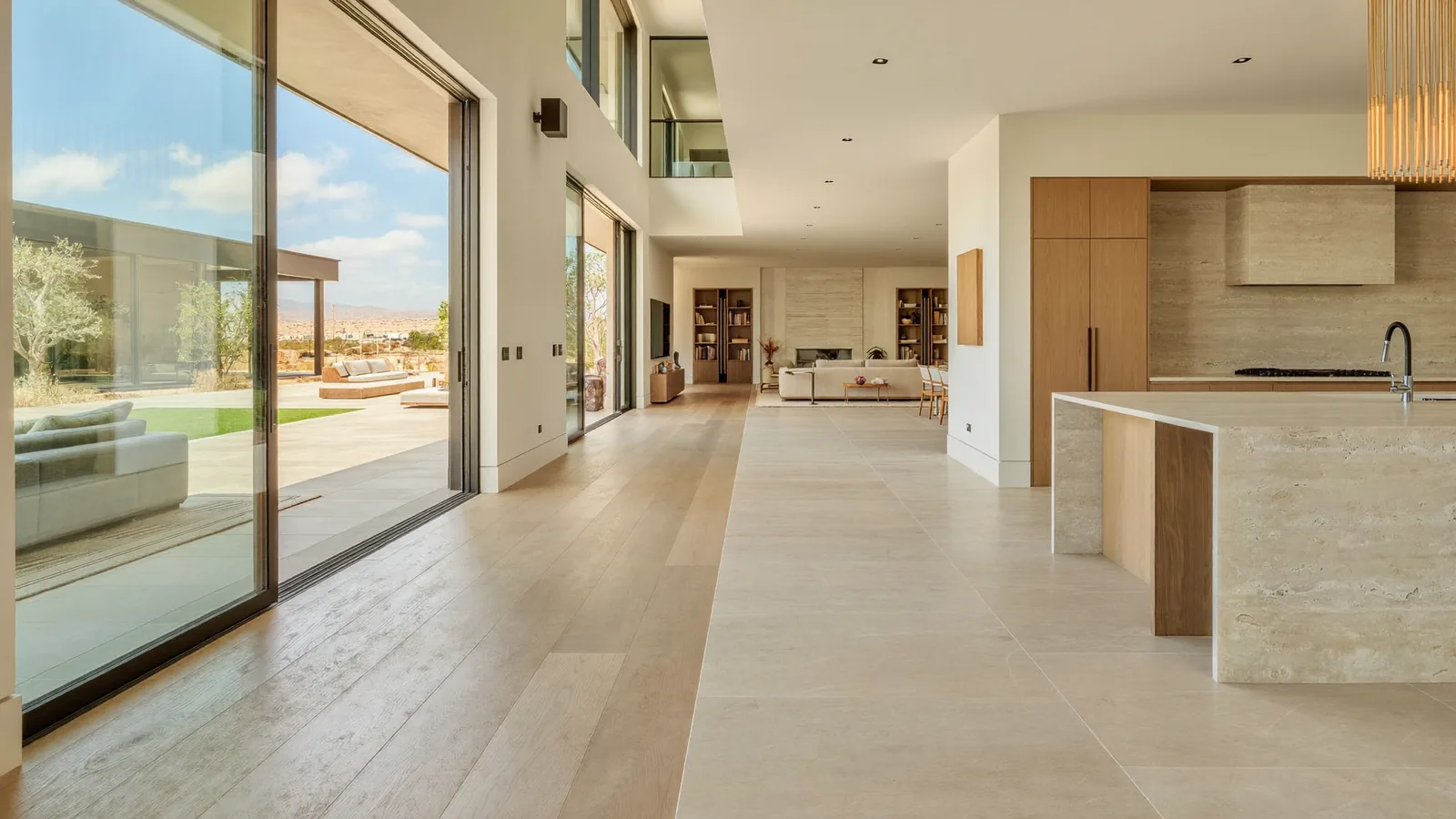
- How will the floor connect to the next room? An open plan makes one material look continuous, while separate rooms give you more freedom.
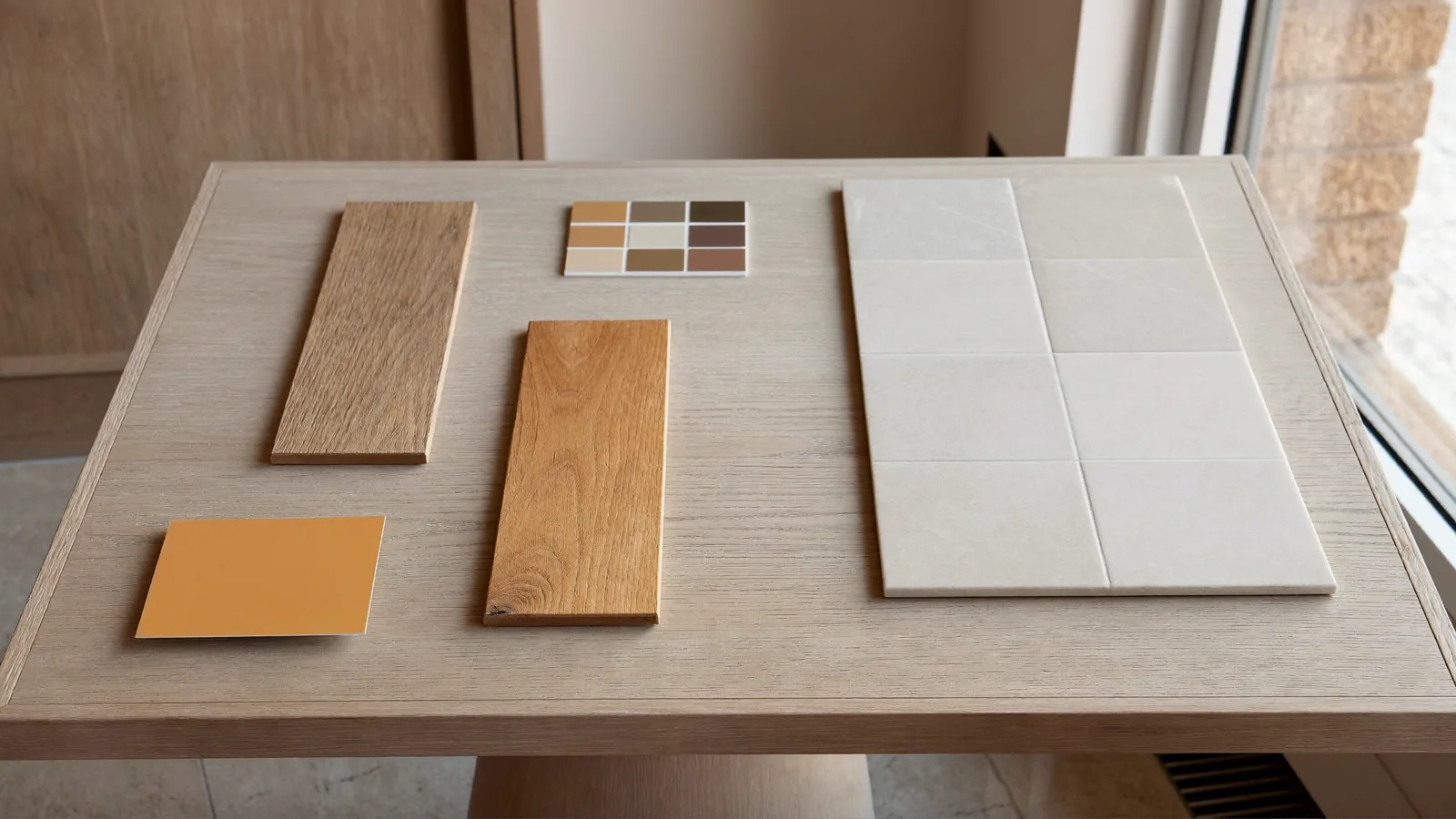
If one material wins in every room, use it. If different rooms point to different answers, that is a normal result, not a compromise.
What should you know about hardwood and indoor humidity?
Wood moves with moisture in the air, so a stable indoor climate matters. The NWFA explains that wood gains moisture and can swell in humid conditions, and loses moisture and can shrink in dry ones. Floors that gain moisture can cup, with raised board edges. Floors that lose moisture can gap or split.
The NWFA's general guidance for limiting both problems is to keep a home between 60 and 80 degrees Fahrenheit and between 30 and 50 percent humidity, year-round. It also says that gaps that appear and disappear with the seasons are considered normal, while large gaps that do not close in more humid months are worth a professional's attention.
Those figures are general guidance, not a measurement of your home. Check your home's indoor humidity with a gauge and compare it with the flooring maker's instructions. If the number sits well outside the maker's range, ask a flooring professional what it means for the product you are considering.
Solid or engineered wood?
The NWFA describes two main types:
- Solid wood is one piece of wood from top to bottom and can be used in any room that is on or above ground. It can be sanded and refinished, and how many times depends on the product's thickness and how much has been sanded before.
- Engineered wood is real wood in layers, with a high-quality wood top layer. It expands and contracts less than solid wood. Some engineered floors can be sanded and refinished, depending on the wear layer and the manufacturer's instructions.
Which type fits your home depends on what sits under the floor and which level it is on, so ask a professional to assess the actual subfloor. Wood species also differ in hardness, and the NWFA notes that the Janka scale gives a general indication of how well a species resists dents. Those Janka values do not apply to engineered flooring, and the cut and finish matter too.
What should you know about tile?
Tile is a hard surface, and the label on the box tells you more than the photo does. Two details are worth checking before you fall for a sample.
Porcelain is a defined term. The Tile Council of North America (TCNA) explains that standards define porcelain tile as an impervious tile with a water absorption of 0.5 percent or less, measured by the ASTM C373 test. The TCNA also notes that some products are advertised as porcelain without meeting that standard, which is why a certification program exists. Ask whether the tile you like is certified porcelain, and ask for the manufacturer's data rather than relying on a store label.
Slip resistance can be documented. According to the TCNA, the ANSI A326.3 standard sets how the dynamic coefficient of friction (DCOF) of hard flooring is measured, and it now requires manufacturers to provide a product use classification based on slip resistance. Appearance does not tell you the classification. Ask which classification applies to the tile you are considering and where it is meant to be used.
How tile handles water depends on the product, the grout, the finish and where it is installed, and tile itself is not a waterproofing system. Tile also asks you to think about grout lines and the feel of a hard surface underfoot. Both are reasons to look at samples in your home rather than choosing from photos.
Which floor suits which room?
Tile is one option for rooms where water is likely, and wood is one option for dry rooms where you want warmth. Treat the options below as preferences and a starting point for a conversation with your remodeler and flooring professional, not a rule or a promise of performance.
Living areas and hallways
Either can work. Wood can give a continuous, warm look across an open plan, as long as the home's humidity stays within the flooring maker's range. Tile responds to indoor humidity differently from wood, though performance depends on the product and installation. Choose based on how you want the space to feel, and on how much you want to manage the indoor climate.
Kitchens
A kitchen is where spills happen, so decide how you will handle them. The NWFA says to clean spills from wood floors immediately with a dry or slightly damp cloth. Spills on tile raise different questions, such as grout and cleaning, and the answers depend on the product, the grout and the finish. If the kitchen opens to a wood-floored living room, plan the transition. Our custom kitchen design guide covers the wider layout choices around the floor.
Bathrooms and laundry rooms
Water is likely here, so some homeowners lean toward tile. Tile itself is not a waterproofing system, so ask your remodeler how wet areas are waterproofed. Look closely at slip resistance, because wet floors are where the DCOF classification matters most. Our bathroom remodeling page asks you to raise ventilation and wet-area construction early, and the flooring choice belongs in that conversation.
Bedrooms and primary suites
Some homeowners choose wood because it feels warm underfoot. If you are weighing a primary suite renovation, our luxury master suite guide covers the broader planning. Check any HOA or building rules about flooring, especially above another unit, before you order.
Entries and indoor-outdoor transitions
Entries pick up grit and moisture, and patio doors bring sun. Tile is one option for these spots. If your project connects to a patio, our indoor-outdoor living guide explains how to think about the connection between spaces.
Can you use both in one home?
Yes. Some homeowners combine the two. The skill is in the join. A change from tile to wood can sit in a doorway, where the change in material reads as intentional, or at an open-plan line, where it needs more care.
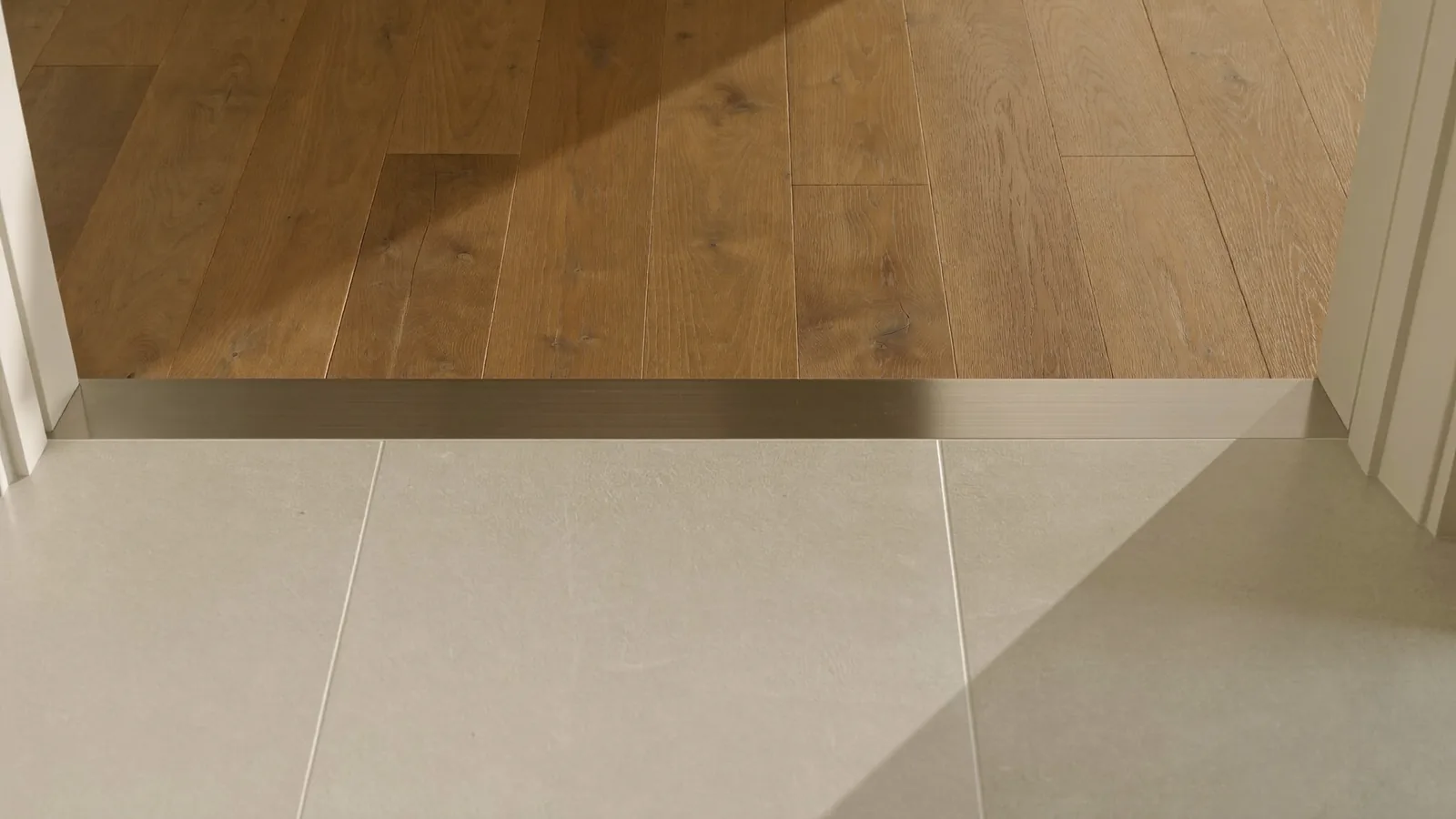
Ask your remodeler about these points before you order:
- Height. Different floor materials and their layers rarely come out to the same thickness, so ask how the two will meet.
- Transition style. Ask what will cover the join and whether it suits the look you want.
- Open layouts. If you are changing a wall, plan the floor at the same time, since a floor that ran under a wall needs attention. Wall changes need an assessment first, as our load-bearing wall guide explains.
How do upkeep and wear compare?
Wood asks for careful cleaning and occasional refinishing, and tile asks you to follow the maker's cleaning advice. For wood, the NWFA says to sweep, dust mop or vacuum using the bare floor setting, and to avoid wet mops and steam mops, which can damage the finish and the wood over time. It recommends a cleaner made for the floor's finish.
The NWFA also suggests felt pads under furniture legs, and avoiding walking on wood floors in sports cleats or high heels. When a finish looks dull, a maintenance coat can renew it. A deep scratch, a dent or a worn-through finish can call for a full sand and refinish, and the NWFA says the number of times a floor can be sanded depends on factors including the wear layer.
For tile, follow the manufacturer's cleaning and sealing guidance for your exact product, since that varies by material. Ask for those instructions in writing before you buy.
What should you ask before you commit?
Bring a short list to your flooring professional and your remodeler. The answers matter more than any general rule.
- What is under this floor, and which level of the home is it on?
- For wood: solid or engineered, and what humidity range does the manufacturer expect?
- For tile: is it certified porcelain, and what slip-resistance classification does it carry?
- How will the floor meet the next room, and at what height?
- What cleaning does the manufacturer require, and how is the finish renewed?
- Do any HOA or building rules apply to this floor?
- Does the work change walls, plumbing or other building systems? If so, what permits apply where you live?
Take your answers into the preconstruction design process so the flooring decision sits inside the full plan.
Frequently Asked Questions
Is hardwood a bad idea in Las Vegas?
Not automatically. The NWFA gives general guidance of 30 to 50 percent humidity for wood floors, so check your home's indoor humidity with a gauge and compare it with the flooring maker's instructions. Engineered wood moves less than solid wood, and a professional can tell you which suits your home.
Is porcelain the same as ceramic tile?
Not exactly. Standards define porcelain tile by its very low water absorption, 0.5 percent or less. Ask for the manufacturer's data and whether the product is certified, rather than relying on how a store labels it.
Can I put hardwood in a kitchen?
Some homeowners do. The NWFA advises cleaning spills immediately and avoiding wet or steam mops, so it comes down to whether your household will keep to that routine. Ask your flooring professional about the specific product.
Do I need a permit to replace flooring?
It depends on the full scope of the project and the authority where your home is. Flooring alone is not the only question, because related work such as plumbing or wall changes can matter. Check the proposed scope with the building authority for your address.
Plan Your Floors With DHCC
DHCC offers interior remodeling in Las Vegas, and flooring is part of how adjoining rooms work together. If you would like to talk through finishes and transitions, get a free estimate or call 702-830-1444 to set up a free consultation. You can also browse recent projects and our services for ideas.
This article is general information, not a product recommendation or a substitute for advice from a flooring professional. Check manufacturer instructions and local requirements for your home.
Sources
- NWFA: Problem Prevention (wood and humidity, 30 to 50 percent, 60 to 80°F, cupping, gaps, seasonal gaps).
- NWFA: Types of Wood Floors (solid and engineered wood).
- NWFA: Durability (Janka scale and its limits).
- NWFA: Maintenance (cleaning, spills, wet and steam mops).
- NWFA: Refinishing Your Floors (maintenance coat, sand and refinish).
- TCNA: Porcelain Tile Certification (porcelain definition, 0.5 percent absorption).
- TCNA: Dynamic Coefficient of Friction (ANSI A326.3 and product use classifications).
Related posts: Luxury master suite renovation in Las Vegas · Indoor-outdoor living in Las Vegas · Custom kitchen design in Las Vegas
Related guides
Should I Remodel or Move? A Las Vegas Homeowner's Decision Guide
Should I remodel or move? The answer usually depends on whether the problem is your house or your location.
Remove a Load-Bearing Wall in Las Vegas: What to Know Before You Open the Floor Plan
Before removing a load-bearing wall, plan for a structural assessment, project-specific engineering and the permit requirements for your Las Vegas address.
Remodeling Permits in Las Vegas: What Needs One and What Doesn’t
Most Las Vegas remodels that go beyond surface finishes need a permit. The City of Las Vegas homeowner guide says you'll generally need one if you add to the home, open up interior or exterior walls, work on electrical, plumbing or mechanical systems beyond routine maintenance, or turn an existing space into something…