
Remodeling Permits in Las Vegas: What Needs One and What Doesn’t
On this page 8 sections
Quick Summary: Most Las Vegas remodels that go beyond surface finishes need a permit. The City of Las Vegas homeowner guide says you'll generally need one if you add to the home, open up interior or exterior walls, work on electrical, plumbing or mechanical systems beyond routine maintenance, or turn an existing space into something new. Painting, tiling, cabinets and countertops usually don't. This guide walks through which projects fall where, who pulls the permit, and what to ask before work starts.
Planning a kitchen, bathroom or whole-home update starts with one practical question: do you need a permit? For remodeling permits in Las Vegas, the short answer is that structural, electrical, plumbing and mechanical work usually needs one, and cosmetic finish work usually doesn't. Below, we break that down project by project so you can plan your home remodeling project with fewer surprises.
When are remodeling permits required in Las Vegas?
In the City of Las Vegas, a remodel generally needs a permit when it changes the structure, opens the walls, or alters the home's systems. The city's homeowner guide, When Do I Need a Permit?, gives four general rules. You need a permit if you:
- Add to the structure or add a new structure.
- Affect the "envelope" of the structure, which the guide puts plainly as opening up the interior or exterior walls.
- Work on or add to the mechanical, electrical or plumbing systems, other than routine maintenance and service.
- Reconfigure an existing room, garage, patio or balcony into something new, such as converting a garage into living space.
Clark County uses similar language for homes in unincorporated areas. Its permit page says anyone who intends to "construct, enlarge, alter, repair, move, demolish or change occupancy" of a building, or to alter its electrical, gas, mechanical or plumbing systems, must first apply for the required permit (Clark County: Do I Need a Permit?).
Both agencies say their guidance isn't all-inclusive. The City of Las Vegas guide ends with a clear instruction: always check with your local building department before you proceed.
Which remodeling projects usually need a permit?
Projects that move walls, change openings, or touch wiring, plumbing, gas or ventilation usually need a permit. In a high-end remodel, that covers most of the work that makes a space feel new.
Here's how the City of Las Vegas guide sorts common remodeling work:
| Remodeling project | Permit usually required? | What the city guide says |
|---|---|---|
| Moving, removing or adding interior walls | Yes | "Move, remove, or add walls" |
| New or wider window and door openings | Yes | "Cut in a new window or door opening, or widen existing openings" |
| Relocating sinks, showers or other plumbing | Yes | Remodels "when existing plumbing is to be relocated" |
| New outlets or light fixtures | Yes | "Run additional wiring to put in an electrical outlet or light fixture" |
| New range hood, bathroom fan or vented appliance | Yes | "Install bathroom fans, dryer exhausts, kitchen range exhausts" |
| Gas line for an outdoor kitchen, fire pit or pool heater | Yes | Gas piping "between the meter and any appliance (indoors or outdoors)" |
| Room addition or garage conversion | Yes | "Add a room"; "convert a garage into habitable space" |
| Enclosing a patio | Yes | "Build a patio or enclose an existing patio" |
| Replacing a water heater | Yes | "Install or replace a water heater or water softener" |
Kitchen and bathroom remodels
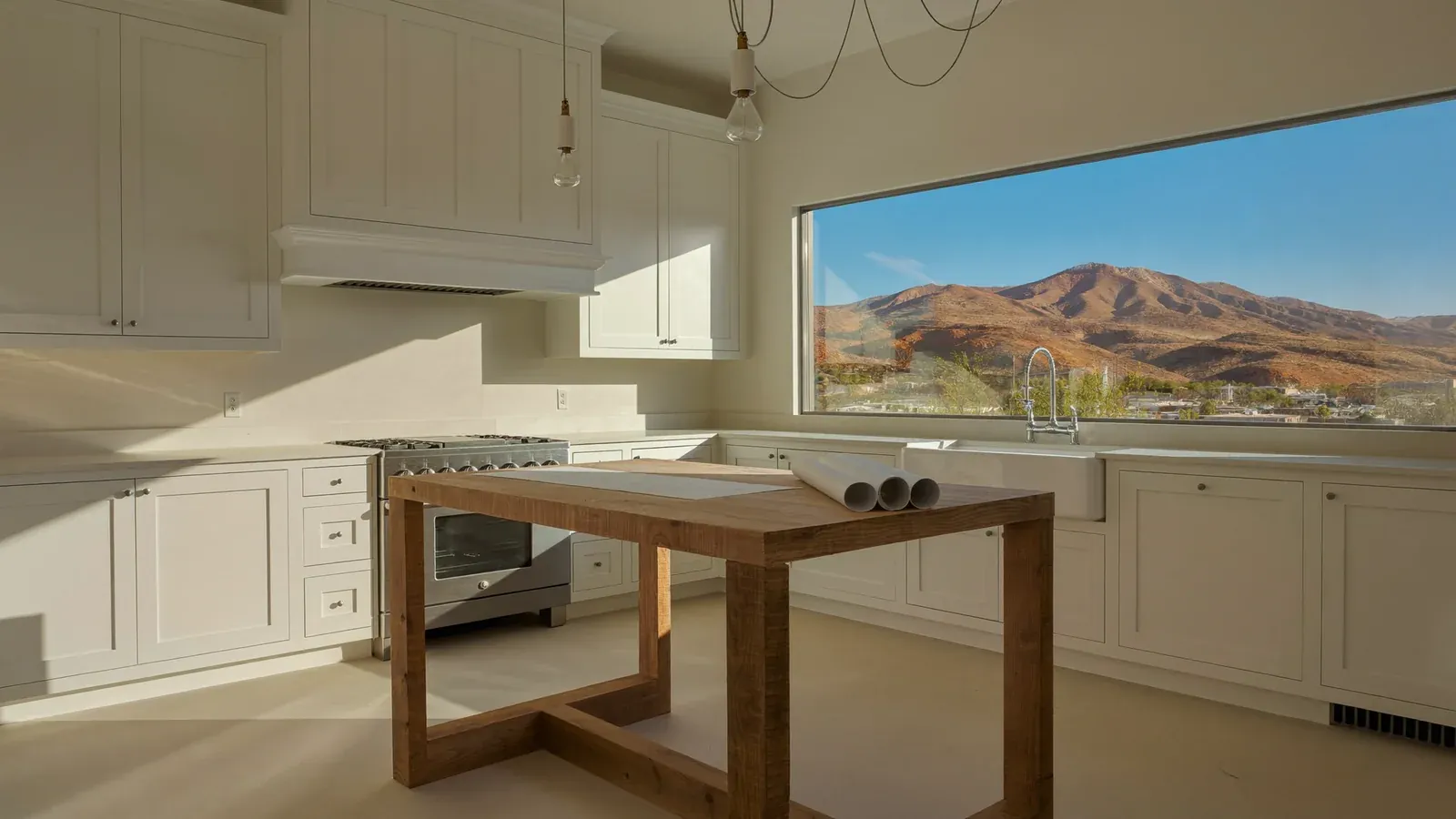
A kitchen or bathroom remodel often combines several of these. Moving an island sink means relocating plumbing. Adding under-cabinet lighting or a new circuit means new wiring. Upgrading to a vented range hood or adding an exhaust fan is mechanical work. Each of these can bring the project into permit territory, even when the room's footprint doesn't change.
Planning one of these rooms? Explore kitchen remodeling or bathroom remodeling to organize your layout, finish and scope questions before discussing the work.
Additions, sunrooms and exterior work
Adding square footage, enclosing a patio or building a sunroom all fall under "add to the structure" or "build a patio or enclose an existing patio." If you're exploring a home addition in Las Vegas, plan for permits and plan review from the start.
What can you do without a permit?
Cosmetic finish work usually doesn't need a permit in the City of Las Vegas. The city guide lists "painting, papering, tiling, carpeting, cabinets, countertops, interior wall, floor or ceiling covering, and similar finish work" as not requiring one.
The same guide lists other common no-permit items:
- Repairing or replacing a sink, toilet or faucet, as long as the faucet isn't concealed in a wall
- Resurfacing shower walls and re-grouting tile
- Replacing doors and windows where no structural member is altered or changed
- Replacing a broken outlet like for like, or replacing an existing garbage disposal or dishwasher
- Replacing gutters and downspouts
There's a catch worth knowing. A project that starts as "just new cabinets and counters" can grow. If the new layout moves the sink, adds outlets for an appliance garage, or opens a wall to the dining room, it's no longer only finish work. That's why it helps to settle the full scope before you set a budget or a timeline.
Which building department covers your home?
Your permit office depends on where your home is, not on the "Las Vegas" in your mailing address. Homes inside City of Las Vegas limits go through the city's Building & Safety Department. Homes in unincorporated areas go through the Clark County Department of Building & Fire Prevention. Homes in Henderson or North Las Vegas go through those cities' own building departments.
The rules are similar in spirit, but details and thresholds can differ between jurisdictions. Before you plan around any specific rule, confirm it with the office that covers your address. The City of Las Vegas offers help applying by phone at 702-229-6251, according to its Apply for a Building Permit page.

Who pulls the permit, you or your contractor?
Either can, depending on the project and how your contract is written, so put the answer in writing. The City of Las Vegas guide advises homeowners to "make sure your contract clearly specifies who (you or your contractor) is responsible for obtaining required permits and inspection approvals."
The guide also explains a Nevada owner-builder exemption. Under NRS 624.031, a homeowner improving a home for his or her own occupancy, and not for sale or lease, is exempt from the state requirement that all work be performed by a licensed contractor. The guide notes this applies mainly to single-family homes, not condominiums or apartments. The guide adds that selling or leasing the property within one year of finishing the work can affect whether the exemption applies.
Even so, the city guide strongly recommends using properly licensed and trained professional contractors whenever possible. It also advises homeowners to:
- Check a contractor's license with the Nevada State Contractors Board
- Beware of any contractor willing to work without permits
- Keep copies of every permit and inspection for your records
Questions to ask before work begins
When you meet with a remodeling company, these questions help set clear expectations:
- Which parts of this project need permits, and from which building department?
- Who will apply for the permits and schedule inspections?
- How are plan review and inspection time built into the schedule?
- What happens if the scope changes after the permit is issued?
Our article on the DHCC preconstruction design process explains how planning before construction helps answer questions like these early.
What happens if remodeling work was done without a permit?
Unpermitted work can become expensive to fix later, especially when you sell or insure your home. The City of Las Vegas guide warns that work discovered later "can require an engineering evaluation and report, possible destructive testing, removal of wall coverings, and replacement" of plumbing, electrical or other elements. It also notes that if you improve or add on without permits and the work fails, "your insurance company may not help you with the liability."
If you've bought a home with an unpermitted remodel, the city offers a path forward. Its permit page describes a year-round amnesty program that lets homeowners "self-disclose non-permitted or non-code-compliant work in their homes without experiencing any penalties for the required plan review and permit fees" (City of Las Vegas).
If unpermitted work sits in the way of your new plans, it's worth raising during your first consultation so it can be planned for, not discovered mid-project.
Frequently Asked Questions
Do I need a permit to remodel my kitchen in Las Vegas?
It depends on the scope. In the City of Las Vegas, replacing cabinets and countertops is listed as finish work that doesn't need a permit. Moving plumbing, adding outlets or lighting, or installing a vented range hood usually does. Confirm with the building department that covers your address.
Do I need a permit to replace windows?
The City of Las Vegas guide says door and window replacements don't need a permit "where no structural member is altered or changed." Cutting a new opening or widening an existing one does need a permit.
Can a homeowner pull his or her own permit in Las Vegas?
Nevada's owner-builder exemption (NRS 624.031) allows a homeowner improving a home for his or her own occupancy to do work that would otherwise require a licensed contractor, with limits. The city guide notes this applies mainly to single-family homes, not condos or apartments. Ask your building department what it requires for your project.
How do I check a contractor's license in Nevada?
The City of Las Vegas guide recommends checking a contractor's license with the Nevada State Contractors Board to confirm the contractor is licensed and bonded to work in Nevada. The guide also warns homeowners to beware of a contractor willing to work without permits.
What if my home already has an unpermitted remodel?
The City of Las Vegas runs a year-round amnesty program for homeowners who self-disclose non-permitted work, without penalties on the required plan review and permit fees. Homes in unincorporated Clark County, Henderson or North Las Vegas should check with their own building department.
Plan Your Las Vegas Remodel With Clear Answers
A remodel goes more smoothly when permits, inspections and scope are settled before the first wall opens. Browse our remodeling portfolio for kitchens, bathrooms and interiors, then tell us about your project. Get A Free Estimate to set up a free in-home consultation, or call 702-830-1444.
This article is general information, not legal or code advice. The City of Las Vegas homeowner guide cited here is an older document (its PDF file was last modified in September 2018), so some details may have changed. Permit rules vary by jurisdiction and can change. Confirm requirements with the building department that covers your address before starting work.
Sources
Related guides

Inside the DHCC Preconstruction Design Process: How We Plan Every Detail Before We Break Ground
DHCC Construction’s preconstruction design process is where your Las Vegas luxury home vision takes shape. Learn how we plan every detail before we break ground.

Energy-Efficient Upgrades for Las Vegas Homes: Solar, Insulation & Smart Systems
Las Vegas heat demands more from your home. Discover the top energy-efficient upgrades — solar, insulation, smart systems — that luxury homeowners are prioritizing in 2026.

Best Las Vegas Neighborhoods for Luxury Home Renovation
Discover the top Las Vegas neighborhoods for luxury home renovation — from Summerlin and Anthem to Lake Las Vegas and Southern Highlands. DHCC Construction explains what makes each community unique and what renovations deliver the best results.